A Weeknight Show, Planned Around Tomorrow Morning
Plan a weeknight concert around tomorrow morning with a clear departure, ride home, and backup, so you can enjoy the show without guessing late.
The common weeknight-concert mistake is waiting until the encore to decide how to get home. That can turn a good show into a rushed exit, a missed ride, or a short night before an early start. A weeknight concert plan works better when you settle the return logistics in advance and leave the evening itself open.
Imagine Maya has a concert on Thursday night and needs to be ready for work Friday morning. She wants to hear the music, spend time with her friend, and avoid treating the show like a schedule to manage. Her plan starts with the morning she has to wake up to, then works backward only far enough to make the trip home realistic.
Set The Morning Boundary
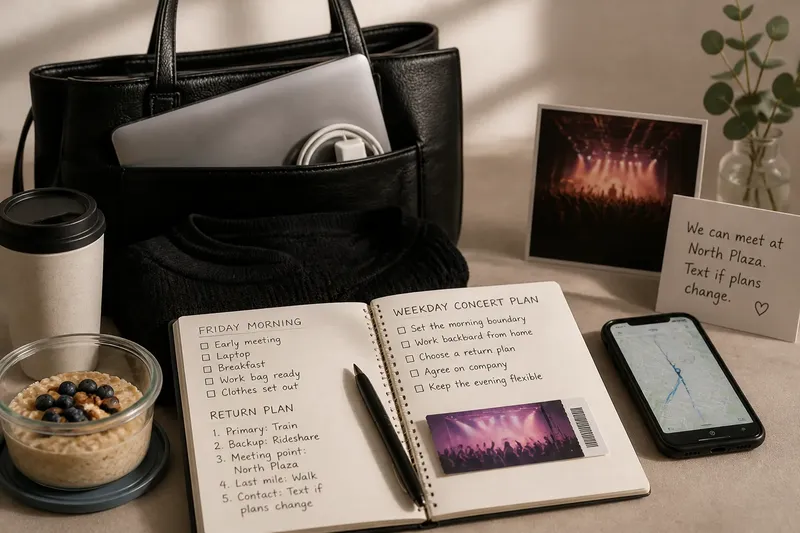
Maya first identifies what Friday actually requires. She has an early meeting, needs to bring a laptop, and would rather not search for clothes or pack a bag after getting home late. She puts those tasks aside before concert day: laptop and charger in her work bag, clothes chosen, breakfast option ready.
This is not an attempt to predict exactly when she will sleep. It simply removes avoidable decisions from the morning. The more she can prepare before leaving for the show, the less the night depends on arriving home with energy for chores.
Write down the fixed morning obligations, then handle any small preparation that would otherwise wait until after the concert.
Work Backward From Home
Next, Maya checks the venue’s published schedule and location, then considers the whole return journey: leaving the room, reaching the pickup point or transit stop, and getting from the arrival point to her door. A posted set time is useful context, not a promise about when the music will end.
She chooses a latest reasonable departure based on Friday’s demands, rather than assuming she will stay until the final note. That boundary is hers to adjust during the night; it is not a demand that her friend leave at the same moment. If she decides the show is worth staying longer, she already knows what that choice means for her return.
Keep the route home practical, not optimistic. Include the walk from the venue and any transfer or pickup wait.
Choose A Return Plan
Maya compares the options that actually serve her route. The venue is near a train station, but the service may be less frequent later in the evening. A rideshare pickup area is available nearby, though crowds could make finding a car slower. Her friend lives in the opposite direction, so a shared ride is not automatically convenient.
She checks current transit information and the venue’s arrival and pickup guidance, then selects a primary route and a workable alternative. She saves the station name and pickup location in her phone, confirms her phone is charged, and tells her friend the plan. She does not rely on a vague “we’ll figure it out” at closing time.
For any venue, route, or ticket conditions that depend on current policies or local service, check the relevant provider’s instructions once before the outing.
- Primary route: the train, bus, taxi, or rideshare option Maya expects to use.
- Backup: another available route if the first is delayed or crowded.
- Meeting point: a clear place outside the venue if she and her friend get separated.
- Last-mile plan: how she will get from the station or drop-off point to her door.
- Contact plan: a charged phone and a simple way to tell her friend if plans change.
A backup only helps if it can be used without a late-night scramble. Choose one you can explain in a sentence.
Agree On Company
Maya and her friend are attending together, but they do not have identical Friday mornings. Before the concert, Maya says she may leave before the encore if the return route starts to look difficult. Her friend is comfortable staying later and knows they can separate at the agreed meeting point.
They also decide what to do if the venue is too loud for a quick conversation: send a text before the show or meet at the marked spot afterward. That small agreement avoids having to negotiate over music, crowds, and a fading phone battery.
Say the departure boundary plainly, without asking the other person to adopt it. Then make room for either person to change plans.
Keep The Evening Flexible
Maya’s plan does not assign a time to every part of the concert. She leaves space to arrive, find the entrance, and enjoy the opening act without treating each delay as a crisis. She carries only what she needs for the venue and keeps her work items at home rather than adding a bulky bag to the outing.
During the show, she pays attention to the practical signals she can control: whether her phone still has charge, whether the agreed pickup point remains accessible, and whether transit information has changed. She does not spend the performance repeatedly checking the clock. If a meaningful change comes up, she can use the route she already considered.
The plan should reduce last-minute choices, not turn the concert into a countdown.
What If Plans Change?
What if the concert ends later than expected?
Maya checks which return options are still available and switches to her backup if needed. If she chooses to stay for the end, she accepts the later arrival rather than assuming the original route will still work.
What if the train is delayed?
She uses the alternative she checked before leaving, such as a taxi or rideshare from the designated pickup area. If that option is unavailable, she contacts her friend and shares her location rather than walking an unfamiliar route on impulse.
What if my friend wants to stay?
They separate at the meeting point they agreed on, and each follows their own return plan. Maya does not need to justify leaving again once the boundary has been discussed.
What if I feel too tired to continue?
She can leave earlier than planned and use the same return arrangement. A plan is useful partly because it gives her permission to respond to how the night is going.
Return Without A Scramble
As the show approaches its end, Maya checks the route once and decides whether to stay. The concert is running late, and the next train connection would leave little room for a delay. She says goodbye to her friend at the agreed point, follows the backup route, and gets home without trying to settle the question outside a crowded exit.
Her next morning is still an early one, but her work bag is ready and breakfast is simple. The result is not a perfectly controlled night; it is a night with fewer avoidable decisions waiting at the end.
For your own weeknight concert plan, prepare the morning, choose a realistic route home, and tell your companion what may change. Then let the show be the part of the evening that gets your attention.