Why a Shortlist Makes Choosing a Show Easier
A shortlist for choosing a show helps you pick a concert that fits your calendar, musical curiosity, and appetite for a particular kind of evening.
The common mistake in choosing a show is treating every listing as a possible plan. That turns a quick decision into a scrolling habit and makes it easy to lose sight of what you actually want to hear. Start with the evening you want, then look for a show that can deliver it.
Picture the evening
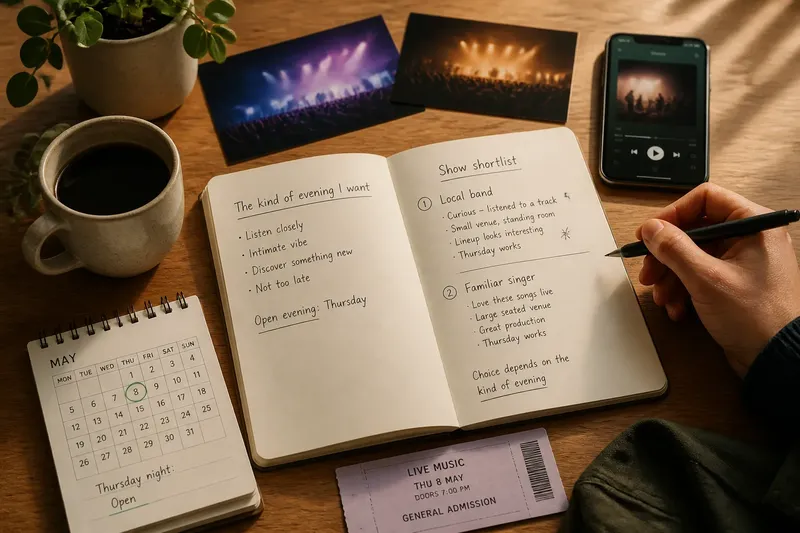
Before opening concert listings, write a few words about the night you want: perhaps a quiet listen, a lively room, or a chance to hear something unfamiliar. This gives you a starting point based on your own mood rather than a poster or an artist’s reputation.
Keep the description grounded in what you enjoy doing. If you like settling in to listen, a show with multiple acts and a late finish may be less appealing than a focused performance. If you want to move with the crowd, an intimate seated show may not scratch that itch.
Think of this as choosing the experience first, not predicting exactly how a concert will feel. A venue’s format, the lineup, and the audience can all shape the evening.
Follow your curiosity
A familiar artist is one reason to go, but it is not the only one. You might want to hear a particular instrument live, catch an opening act, revisit songs tied to a memory, or explore a style you have not spent much time with.
Write a specific reason beside a listing. “Want to hear the new songs” gives you something useful to weigh; “it looks important” may only reflect pressure to keep up with an event.
Make room for curiosity without turning it into homework. If you are interested in an unfamiliar act, listen to a track or read the venue’s description, then decide whether that small preview makes you more inclined to go.
Check your calendar
Look at your calendar before getting attached to a show. Mark the evenings you can genuinely keep free, including any next-day commitments that affect how late you want to be out.
Say you have a free Thursday and a Saturday morning commitment. You find a Thursday show by an artist you have been meaning to hear and a Friday event that would make the next morning harder. Keeping Thursday as your available evening gives you a clear direction without pretending Friday is equally workable.
Leave dates out when you already know you would resent the tradeoff. An open square on the calendar does not automatically mean you want to spend that evening out.
Use a decision filter
For each listing you are considering, check the same practical and personal signals. Use the result to decide whether the show stays in consideration, needs more checking, or should come off your list.
- Calendar: Check whether you can set the evening aside; if you have a firm commitment or would resent the timing, remove the show, and if the date is genuinely open, keep considering it.
- Musical pull: Check whether you can name what you want to hear; if you can, keep the listing, and if you cannot, look for a specific reason before spending more time on it.
- Evening style: Check whether the format suits the kind of night you want; if it does, keep it, and if it does not, choose a better-fitting listing or leave it off.
- Curiosity: Check whether an unfamiliar act sparks a concrete question or interest; if so, preview a track or lineup note, and if not, do not keep it solely from fear of missing out.
- Unanswered detail: Check what fact would change your decision, such as the set format or venue location; if one detail matters, verify it with the venue, and if nothing would change your choice, stop researching.
- Personal reason: Check whether you can explain why this show appeals to you; if the reason feels genuine, keep it in consideration, and if it is only outside pressure, remove it or revisit it later.
Imagine you are choosing between two hypothetical listings for an open Thursday. One is a familiar singer in a large seated venue; the other is an unfamiliar local band at a small standing room. You want to listen closely and are curious about the band, so you check its posted lineup and listen to one available track; the track interests you, but the venue format still matters. You check the venue’s event page and see that the show is standing-room, then decide whether that tradeoff suits the evening: if close listening matters more, choose the seated show; if discovery matters more, choose the local band. The decision comes from the stated preference, not from trying to name a universal winner.
Choosing a show?
Should I pick a familiar artist?
Choose a familiar artist if hearing those songs live is the main reason you want to go. If you feel more curious about another listing, let that interest count rather than assuming familiarity must win.
Is an unfamiliar act worth considering?
It can be, if you can name what you want to discover. Check a track or the event description, then keep the show only if that preview leaves you genuinely interested.
What if two shows both appeal?
Identify the detail that separates them for this outing, such as the musical draw, evening format, or calendar fit. If neither stands out, choose the one you would be more disappointed to miss, or pause and see which listing you return to.
When should I stop looking?
Stop when you have a show that fits the evening you want and no unresolved detail is likely to change your choice. Then check the venue or ticket seller’s current event information before making plans.
Leave room to change
Your preferences can shift after you see a lineup or learn more about a venue. If that happens, update the reason you are considering the show instead of defending an earlier choice just because it made your first list.
A shortlist for choosing a show is useful when every listing has a clear reason to stay. Keep the note brief and specific; if the reason no longer fits, remove the listing and give your attention to the option that does.