From Paper Stub to Phone Screen: A Brief Ticket Keepsake
A concert ticket keepsake can preserve the details and feeling of a show after digital entry records disappear, without depending on a paper stub.
The easiest way to lose a concert memory is to assume the ticket will preserve it for you. Paper stubs once stayed in wallets or jacket pockets; now a phone screen may show a barcode that disappears after entry, leaving little to revisit. A concert ticket keepsake can hold onto the useful details without requiring a printed ticket.
Tickets have changed from objects carried to the venue into records stored in apps, emails, and accounts. That shift makes a small, deliberate memory record more helpful than trying to save an entry code. These five ideas keep the focus on what the ticket can remind you of: the show, the night, and the people who shared it.
1. Treat the ticket as a record
A paper ticket often combined several roles: permission to enter, proof of purchase, and a souvenir. A digital ticket separates those roles. The barcode or rotating pass is for admission, while the confirmation email and order history may retain practical details such as the artist, venue, date, and ticket type.
After the show, the admission code is usually the least meaningful part to keep. It may stop working, be hidden in an app, or contain information you should not share. Save the event details instead, and avoid posting screenshots that reveal barcodes, order numbers, or account information.
Think of the keepsake as a note about the occasion, not a copy of the credential.
2. Save a clean event record
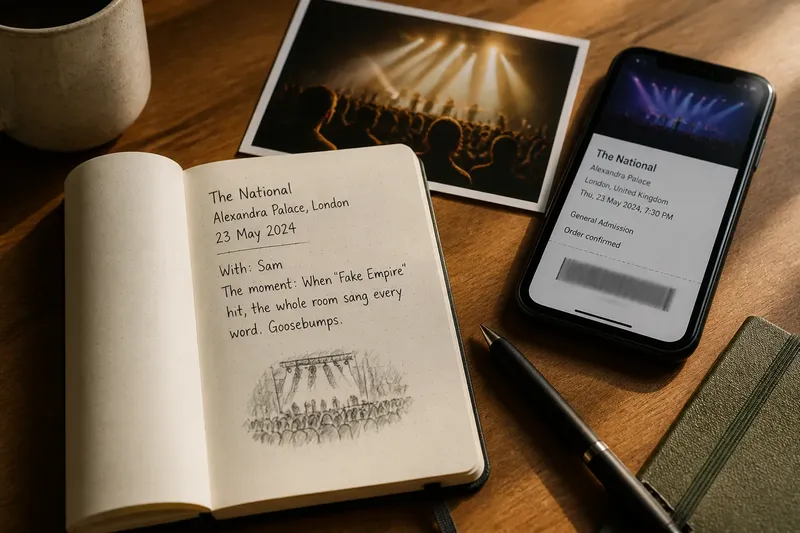
Choose one place you already use for personal records: a notes app, a private photo album, or a folder in cloud storage. Add the artist, venue, date, and a short note about who went with you. If the ticket confirmation includes the event name, save a copy for reference, but keep access codes and purchase details private.
Use a clear file name, such as “Artist at Venue — month and year,” rather than leaving an image called “Screenshot.” If you save a ticket image, crop or cover the barcode and any account details before adding it to a shared album. A plain text note is often enough and is easier to search later.
Say you attended a show with a friend and the ticket now lives only in an app. You could make a note with the artist, venue, date, and the friend’s name, then add one sentence about the song that brought everyone to their feet. The expected result is a record you can find and understand later, even if the original pass has vanished.
3. Keep one vivid detail
A list of event facts identifies the night, but a sensory detail helps bring it back. Write down what you remember noticing: the crowd singing a chorus, the stage lights turning a familiar song a different color, or the quiet walk out after the encore. Choose an observation that belongs to your experience rather than trying to review the performance for someone else.
Keep the note short enough to write before the details blur. One or two sentences can capture what made the evening distinct without turning the keepsake into a full concert diary. If you cannot remember a set list accurately, leave it out or mark it as incomplete instead of filling gaps from memory.
A specific detail gives the record a personal anchor.
4. Add a small visual cue
If you want something more tactile than a note, pair the event details with a photograph you took, a saved venue image, or a simple graphic made from the artist’s name and date. Use images you have permission to keep and share, and avoid copying a poster or promotional artwork into a public post without checking its terms.
You can also print the note or photo on ordinary paper and place it in a journal, without pretending it is the original ticket. A handwritten caption can supply the context a photograph lacks: who was there, what you were celebrating, or why you chose that show. Keep the image secondary to the memory, not as a substitute for a full account of the night.
For an especially simple keepsake, write the artist, venue, and one remembered moment on the back of a personal photo.
5. Choose a format you will revisit
A keepsake only helps if it is easy to find. A digital folder suits someone who searches by artist or year; a journal works for someone who likes reading old entries; a small printed collection can suit a shelf or memory box. Pick one method rather than scattering the same information across several apps and notebooks.
Make the location predictable. Keep concert notes together, use the same naming pattern, and add the date in a format you can recognize at a glance. If you share the memory with friends, make a separate version without private ticket data and check that the image or details are appropriate for the audience.
Choose the format you are most likely to revisit, not the one that looks most elaborate.
Questions about ticket keepsakes?
Should I save a screenshot of my digital ticket?
Save a screenshot only if it helps you remember the event, and remove or obscure the barcode, order number, and account details first. The event name, venue, and date are usually more useful for a keepsake than an admission code.
What if the ticket app removes the event?
Use the confirmation email, calendar entry, or your own note to record the basic event details while they are easy to access. A short written record does not depend on the venue or ticketing app keeping an old pass visible.
Can I make a keepsake without a photo?
Yes. Write down the artist, venue, date, companions, and one detail you remember clearly. A few specific words can identify the night without an image or a physical ticket.
Is a printed ticket better than a digital record?
Neither format is necessary for remembering a show. A paper ticket can be a pleasant object, while a digital note is searchable and easy to store; choose the one that fits how you keep personal memories.
A small record lasts
A concert ticket keepsake does not need to recreate the old paper stub. Save the event facts, add one detail only you would remember, and store the result somewhere you can find it. That modest record can bring the night back without keeping an expired pass or exposing private ticket information.